AI Fluency: What Boards Now Expect From C-Suite Leaders
What boards are screening for in 2026 and how senior leaders can close the gap.
THE SHIFT IS NO LONGER THEORETICAL
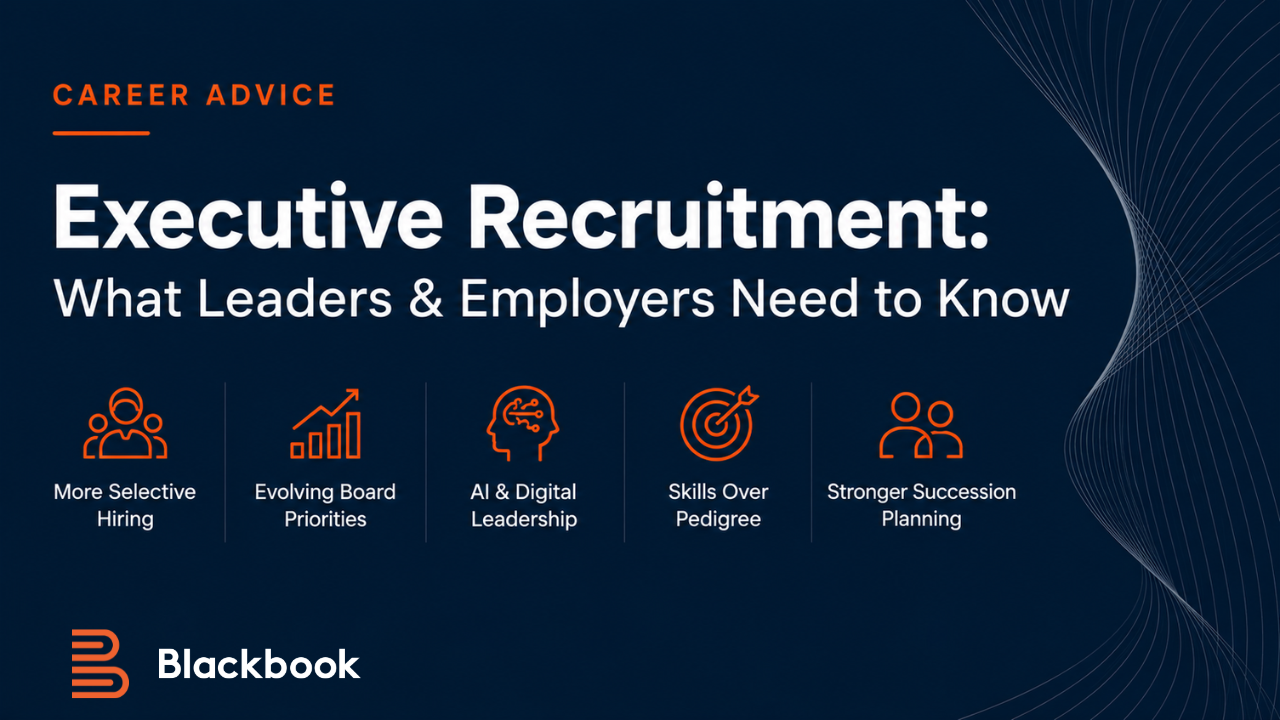
AI has moved from an IT agenda item to the centre of executive accountability. Two-thirds of CEOs now name AI a top-three strategic priority, and 72% see themselves, not their CTO, as the primary decision-maker on it. Half say their own job stability now hinges on getting AI integration right this year.
The demand signal from boards is explicit: in a 2026 survey of CEOs, chairs and independent directors, 69% said their C-suite most needs AI expertise, ahead of M&A integration and digital transformation skills combined.
YET THE CAPABILITY GAP IS WIDE
- AI is now the single largest perceived skills gap in executive leadership, ahead of strategic clarity and decision-making (LHH, 2026).
- Only 27% of executives have a comprehensive AI strategy; just 20% believe their own workforce is AI-ready (Gartner).
- Just 39% of Fortune 100 boards have any formal AI oversight structure, a committee, an AI-literate director, or an ethics board (McKinsey).
WHAT “FLUENCY” ACTUALLY MEANS
This is not a technical bar. No board is asking its CFO to write code. The fluency that matters is the ability to ask sharp questions, separate genuine capability from vendor hype, and exercise real judgment on where to invest, where to hold, and how to govern risk. It is decision fluency, not build fluency, and it is fast becoming as fundamental to the C-suite as financial literacy has always been.
Boards are also learning to tell the difference between fluency and performance of fluency. Candidates increasingly arrive with polished language about “transformation” and “competitive advantage.” The tell is engagement versus delegation: leaders who can go into genuine detail on how AI is being deployed, where it has failed, and why, versus those who describe only having “set the vision.”
CONCLUSION: HOW TO GET UP TO SPEED QUICKLY
For executives and boards starting from behind, the fastest path is not a crash course in machine learning. It is building structured judgment, deliberately and quickly:
-
- Install governance before strategy. Stand up a board-level AI oversight point, a committee or a designated director, before expanding AI investment further. Discussion time is not the same as governance.
- Get close to real deployments, not demos. Spend time monthly with the teams actually running AI systems in your business. Fluency is built by proximity to what has worked and what has quietly failed, not by vendor briefings.
- Build a shared vocabulary across the top team. Misalignment on basic AI terms and risk categories is the most common reason boards approve budgets they cannot later interrogate.
- Pressure-test with skepticism, not enthusiasm. Up to 40% of early agentic AI projects may be cancelled by 2027 on cost or unclear value. Leaders who can name failure modes are further ahead than those who can only name benefits.
- Hire and assess for judgment, not vocabulary. In search and succession processes, reference-check for depth of engagement with real deployments, not familiarity with the language of transformation.
*Sources: BCG AI Radar; The Conference Board 2026 C-Suite Outlook Survey; Bank Director 2026 Compensation & Talent Survey; LHH 2026 View from the C-Suite; Gartner; McKinsey; NACD; Deloitte Global Boardroom Program.