The State of the Executive Market in 2026: What Leaders and Employers Need to Know
Category: Career Advice | Audience: Senior Leaders & Executives
The executive recruitment and hiring market in Melbourne and Sydney has changed shape over the past twelve months. It isn’t frozen, but it is more selective, more deliberate, and more shaped by economic caution than it was even two years ago. For candidates weighing their next move, and for organisations planning their next senior hire, understanding these shifts is the difference between reacting to the market and getting ahead of it.
At Blackbook Executive, we sit at the centre of these conversations every day, working with boards, hiring leaders and candidates across Melbourne, Sydney and beyond. Here’s what we’re seeing right now.
A More Cautious, More Selective Market
Executive demand across Australia has softened through the first half of 2026, with New South Wales and Victoria both recording notable pullbacks in senior hiring activity in recent months. Much of this reflects broader business confidence, organisations are planning leadership hires with far more scrutiny than in previous cycles, and few are hiring reactively.
That doesn’t mean the market has stalled. It means intent now drives every search. Employers are asking sharper questions before they open a role: Is this hire essential right now? Does it need to be permanent, or could it be a fixed-term or fractional appointment? What capability gap, specifically, are we filling? Strategic workforce planning has become central to how leadership decisions get made, rather than an afterthought once a seat becomes vacant.
For candidates, this means the days of a strong track record alone opening doors are largely behind us. Executive job seekers who succeed in this market are the ones who can clearly articulate the specific problems they solve, not just the roles they’ve held.
What Boards and Hiring Committees Are Prioritising
The criteria used to evaluate senior leaders has shifted meaningfully. A few themes stand out:
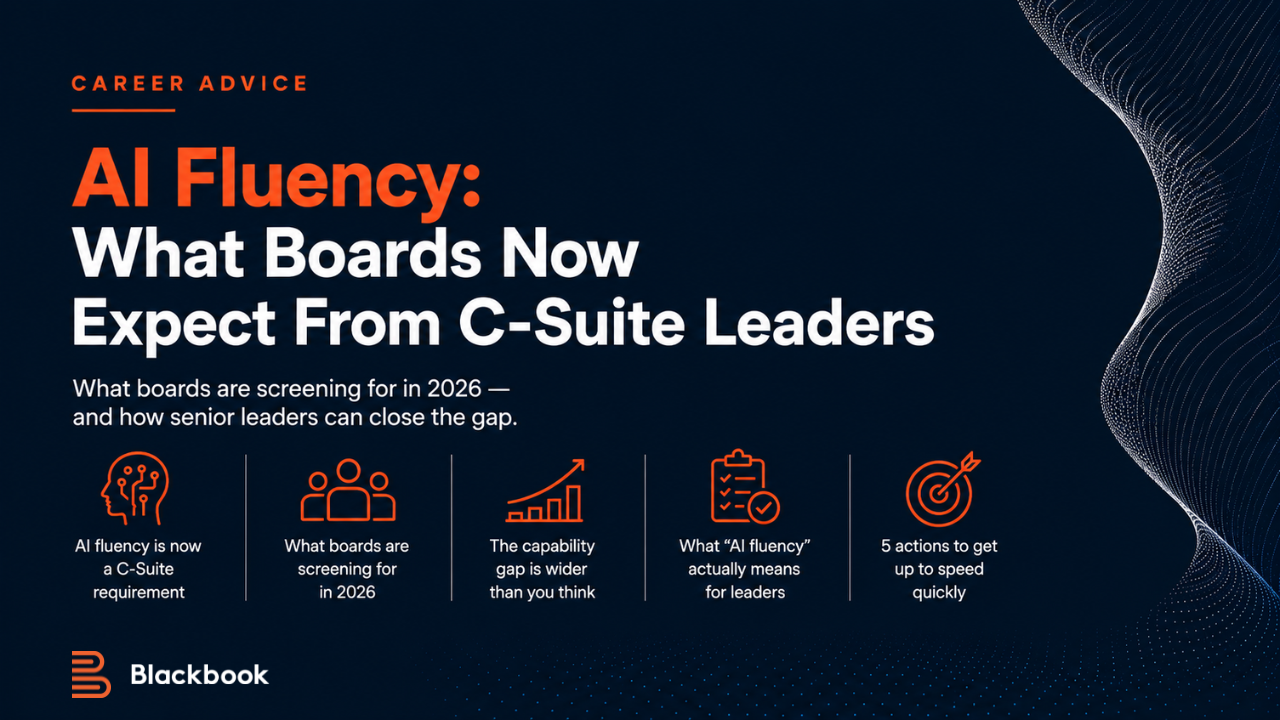
Technology fluency is now table stakes. Boards no longer expect executives to be technologists, but they do expect genuine comfort with how AI and digital transformation affect strategy, workforce planning, and value creation. Leaders who can speak credibly about these shifts, regardless of their functional background, are being prioritised over those who can’t.
Adaptability is outweighing pedigree. Skills-based hiring is gaining real traction at the executive level. Rather than filtering primarily on years of experience or where a candidate has worked, more organisations are assessing what a leader can do: how they’ve navigated ambiguity, led through restructuring, or built teams from scratch. Demonstrated impact is carrying more weight than titles.
Non-traditional backgrounds are getting a genuine look. Boards are increasingly open to leaders moving between industries and functions, partly out of necessity, traditional talent pools for many senior roles are simply too shallow, and partly because leaders who’ve driven transformation in one sector often bring valuable pattern recognition to another.
Culture and values alignment matter more than ever. Candidates are also being more selective. Senior talent is actively researching an organisation’s reputation, leadership style, and values before engaging in a process, and many are prioritising roles that align with their own risk appetite and long-term direction over simply the next step up.
The Rise of Flexible Leadership
One of the more structural shifts in this cycle is the growing normalisation of fractional and interim executive appointments. Rather than committing to a full-time hire immediately, more Melbourne and Sydney organisations are bringing in senior leaders on a project or part-time basis to navigate a specific transformation, cover a capability gap, or steer a business through a defined period of change. For experienced executives open to this model, it’s creating a genuine alternative pathway to permanent leadership roles, and for organisations, it’s a way of accessing senior capability without the full commitment of a permanent hire in an uncertain market.
Succession Planning Is Back on the Boardroom Agenda
With many long-serving CEOs and senior leaders staying in role longer than previous generations, and leadership quality increasingly tied to organisational value, boards are under growing pressure to strengthen succession pipelines well before a vacancy arises. Combined with a persistent gap between the skills boards need and the pace of leadership turnover, this is pushing succession planning and the leadership pipelines that support it, firmly back onto the boardroom agenda. Organisations that treat this as a live, ongoing process rather than a reactive scramble are better positioned when a senior departure does occur.
What This Means If You’re Hiring
If your organisation is planning a senior appointment in the months ahead, a few practical takeaways from what we’re seeing in the Melbourne and Sydney markets:
- Get specific before you brief. The clearer you are on the capability gap you’re filling, the more precisely a search can be targeted and the more efficiently it will move.
- Widen the aperture on background. Some of the strongest candidates in the current market won’t come from your immediate sector. Don’t filter them out at the first pass.
- Consider the shape of the hire, not just the person. Fractional, interim, and project-based leadership are legitimate options worth weighing alongside a permanent appointment, particularly for transformation-specific mandates.
- Treat succession as ongoing, not episodic. Waiting until a role is vacant to start thinking about the pipeline puts you at a structural disadvantage.
What This Means If You’re Looking
For executives considering their next move, the market rewards clarity and preparation over volume:
- Lead with outcomes, not job titles. Boards and hiring committees are assessing what you’ve delivered, not just where you’ve worked.
- Build your AI fluency. You don’t need to be technical, but you do need a credible point of view on how technology is reshaping your function and industry.
- Be deliberate about fit. With senior talent more selective about where they land, taking the time to genuinely assess an organisation’s culture and direction, rather than chasing the next title, tends to produce better long-term outcomes.
- Don’t rule out non-traditional roles or structures. Interim and fractional appointments can be a strategic way to build board-level experience or pivot into a new sector.
Navigating the Market with the Right Partner
The Melbourne and Sydney executive markets are more nuanced than they’ve been in years, shaped by economic caution, evolving board priorities, and a genuine shift in what “leadership capability” means. Whether you’re building a leadership pipeline or planning your next career move, having a search partner with current market intelligence, not last cycle’s playbook, matters more than ever.
If you’re planning your next executive recruitment assignment, or you’re an executive considering your next opportunity, get in touch with the Blackbook Executive team to discuss what this market means for you.